The carrier type decides how much of the road your car actually meets. Here is what changes between an open and an enclosed carrier, and when the difference matters.
Key Takeaways
- Open carriers expose vehicles to road debris, dust, rain and sun throughout the journey.
- Enclosed carriers cost more because they carry fewer vehicles per trip and weigh more.
- Luxury, vintage, repainted and low-clearance cars almost always justify enclosed transport.
- Monsoon and long-distance routes amplify the risks of open carrier transit significantly.
- Always confirm in writing whether your quote covers open or enclosed carrier space.
What an open carrier really means
An open car carrier is the multi-level trailer you see regularly on Indian highways — two or three decks of vehicles sitting in the open air, held in place by wheel chocks and basic tie-downs. The structure is essentially a steel frame with ramps, floors and railings but no walls, roof panels or side enclosures. Vehicles are driven up a rear or side ramp, positioned on their assigned deck, and secured at the wheels. From that point onward, every car on the trailer shares the same environment as the road surface below it.
The lack of enclosure means your vehicle is directly exposed to everything the highway throws at it. Stone chips flicked up by passing trucks, fine dust that accumulates over hundreds of kilometres, tar splatter from freshly laid road, bird droppings, tree sap at overnight halts, rain during monsoon crossings, and harsh UV exposure across desert stretches in Rajasthan or central India. None of these will total a car, but they can leave marks that need professional detailing or even a panel respray to resolve properly.
Open carriers remain popular in India for one clear reason: cost. Because the trailer has no heavy enclosure panels, it weighs less, carries more vehicles per trip, and burns less fuel relative to payload. That efficiency is passed on as a lower per-vehicle freight rate. For a routine hatchback or a mid-range sedan heading across a short corridor in dry weather, the savings are real and the risk may be acceptable.
How an enclosed carrier is built differently
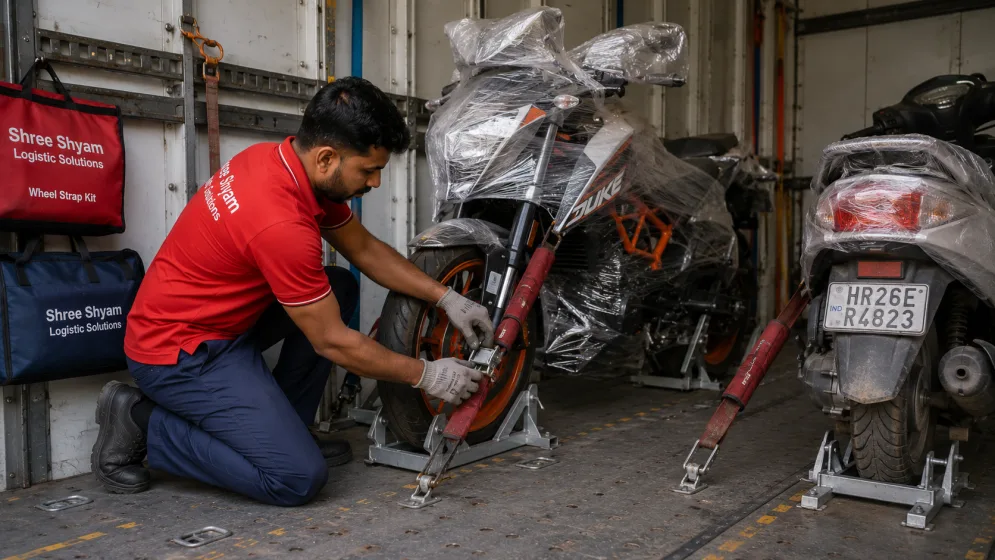
An enclosed or closed car carrier is a box-body trailer — steel or aluminium walls on all four sides, a solid roof, and loading access through a rear hydraulic door or side gate. Inside, the deck surfaces are flat and clean, lighting is fitted for inspection during loading, and vehicles are secured with soft nylon-strap tie-downs at the wheel or axle rather than chain hooks. The interior is sheltered from wind, water and airborne debris the moment the doors close.
Because the body itself adds substantial weight, an enclosed carrier typically moves fewer vehicles per trip — often four to six cars where a similar-length open trailer might carry eight to ten. The trailer also costs significantly more to manufacture and maintain, requiring panel repairs after minor collisions that an open frame would simply shrug off. All of this feeds into the per-vehicle cost. The price premium is not arbitrary; it reflects lower capacity, heavier equipment, and higher maintenance.
From the vehicle owner perspective, what changes is simple: nothing on the road touches your car. No gravel, no rain, no dust film, no sun-bleached trim after a three-day transit under open sky. Security is also better — passing motorists and roadside onlookers cannot see the vehicles inside, which reduces opportunistic targeting of high-value cars during overnight stops.
Need a quote while you read?
Share your route and vehicle — we reply with an all-inclusive price.
The real cost difference and why it exists
The gap between open and enclosed transport is not a quality markup — it is driven by physics and capacity. An enclosed trailer weighs more, fits fewer vehicles, costs more to build, costs more in fuel per kilometre, and depreciates faster because of bodywork wear. When a transporter divides that total trip cost across four cars instead of eight, each car naturally absorbs a larger share. That is the entire explanation for the higher rate.
For the customer, the right question is not which option is cheaper in isolation but which option is cheaper relative to what you stand to lose. If a stone chip on an entry-level hatchback costs a few hundred rupees to touch up, the open carrier saving is sensible. If a stone chip on a freshly painted luxury bonnet means a full panel respray that costs multiples of the freight difference, enclosed transport pays for itself before the carrier reaches the highway.
When enclosed transport is clearly worth it
Certain vehicles make the enclosed choice obvious. A brand-new car being delivered from a dealer to a buyer in another city should arrive in showroom condition — one visible scratch undermines confidence in the purchase. A recently repainted or restored car has fresh clear coat that is softer and more vulnerable to chips in its first few weeks. Luxury and premium models carry paint correction costs that dwarf freight savings. Low-clearance performance cars need the shallow ramp angle and careful deck positioning that enclosed carriers are set up for.
Vintage and classic cars present a unique case. Parts are hard to source, original paint is irreplaceable, and chrome trim that took months to restore can be pitted by a single gravel shower. Owners of such vehicles rightly insist on enclosed transit, and often request a dedicated carrier that holds only their vehicle. The cost is higher, but it matches the irreplaceability of what is being moved.
- New cars in delivery from dealer to buyer in another city
- Recently repainted, wrapped, or ceramic-coated vehicles
- Luxury, premium, and supercars with expensive paint correction costs
- Vintage, classic, or restored vehicles with irreplaceable parts
- Low-clearance or modified cars requiring shallow ramp loading
- Vehicles being moved for exhibition, auction, or photography
When an open carrier is perfectly sensible
Not every vehicle needs full enclosure. If you are moving a daily-use car that already has stone chips, minor parking scratches, and a few years of normal wear, the marginal damage from an open transit is unlikely to bother you or reduce the vehicle value meaningfully. The saving on freight can be substantial, particularly on longer routes where the per-vehicle cost gap compounds with distance.
Short-corridor moves in dry weather also tilt the balance toward open carriers. A move from Delhi NCR to Jaipur or Chandigarh covers a few hundred kilometres, involves relatively clean highway, and completes within a day. The exposure window is short enough that the statistical chance of meaningful damage drops considerably. Similarly, fleet operators and car dealers moving bulk inventory often choose open carriers because the per-unit economics matter more to their margins than the occasional touch-up.
The key is informed choice. An open carrier is not a negligent option — it is an economical one with a defined trade-off. Problems arise only when customers are sold open transit at enclosed pricing, or when they expect enclosed protection without having confirmed what the quote actually covers.
Monsoon and dust on long Indian routes
India introduces variables that generic carrier comparisons often ignore. A vehicle moving from Gurgaon to Chennai in July will cross rain-soaked highways in Madhya Pradesh and Telangana, encounter waterlogged stretches, and be pelted by spray from heavy commercial traffic for hours at a time. On an open carrier, that vehicle arrives not just wet but stained — road grime mixed with rainwater dries into a film that bonds to clear coat and requires machine polishing to remove safely.
Dust is the dry-season equivalent. Routes through Rajasthan, central Madhya Pradesh, and parts of Karnataka carry a fine particulate load that coats every exposed surface. After a multi-day open transit, the dust is not just sitting on top — it has been driven into panel gaps, air intakes, rubber seals and trim joints by wind pressure at highway speed. Enclosed carriers eliminate this almost entirely because the body shell keeps moving air out.
For anyone planning a long-distance move during monsoon months — roughly June through September — or along known dusty corridors, the enclosed option removes a category of post-delivery cleaning and potential damage that the open alternative simply cannot avoid.
Capacity and availability differences
Open carriers dominate the Indian car transport market by volume. Because they carry more vehicles per trip and cost less to operate, transporters run them more frequently on popular corridors. That means shorter waiting times and more departure options for customers willing to use them. If you need a vehicle moved quickly and the calendar is tight, an open carrier is often available sooner simply because more of them are running.
Enclosed carriers are fewer in number and fill up with bookings further in advance, especially during peak transfer months and festive seasons when high-value vehicle movements increase. Booking an enclosed carrier at short notice on a popular route can be difficult, and the premium rises further if you need a specific departure date. Planning ahead by even a week or two improves both availability and pricing for enclosed options.
How to verify what you are being quoted
The most common complaint in this segment is not about damage — it is about expectation mismatch. A customer pays for what they believe is enclosed transport and finds their car loaded on an open frame. Or a low quote turns out to be for open transit, never explicitly stated, and the customer assumed enclosed because the word was not mentioned either way. This is avoidable with three simple checks before you confirm a booking.
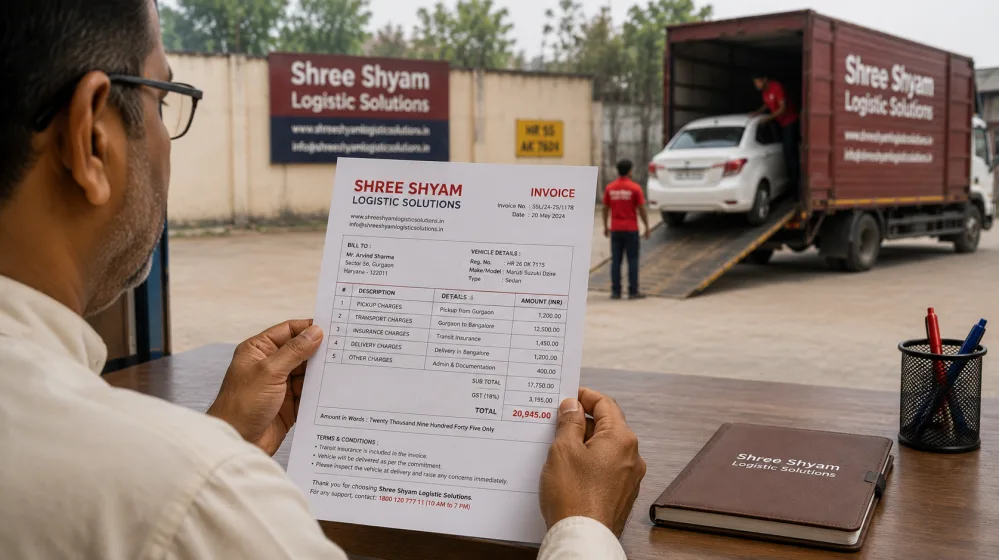
First, ask the transporter directly: is this quote for an open carrier or an enclosed carrier? Get the answer in writing — on the booking confirmation, the invoice, or at minimum in a message you can reference later. Second, ask for a photograph of the actual carrier type that will be used for your vehicle. Legitimate operators have no problem sharing this. Third, confirm that the carrier type is specified in any written agreement or receipt you sign at pickup. If the document just says vehicle transport without specifying the method, clarify before you hand over the keys.
- Ask explicitly whether the quote is for open or enclosed and get it in writing
- Request a photo of the carrier type assigned to your vehicle
- Ensure the booking confirmation states the carrier type clearly
- Confirm at pickup that the carrier matches what was agreed and documented
Making the right choice for your vehicle
The decision comes down to matching the carrier type to your vehicle condition, value and the route involved. A used car with existing wear, moving a short distance in dry weather, is well served by an open carrier at a lower cost. A new, repainted, luxury, vintage or modified car travelling a long route — especially through monsoon zones or dusty corridors — belongs inside an enclosed carrier where nothing on the road can reach its surfaces.
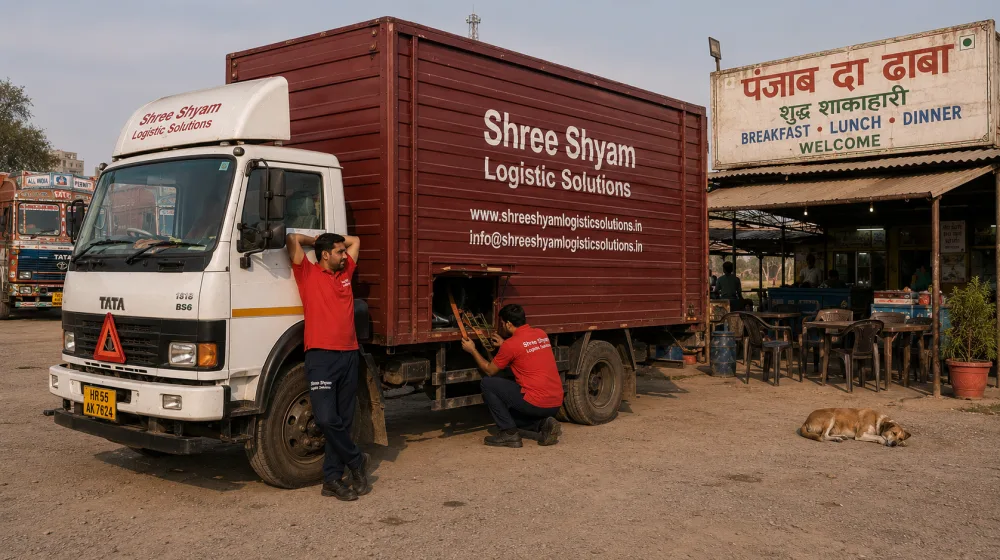
At Shree Shyam Logistic Solutions, we operate enclosed carriers as our standard because the vehicles we handle from Gurgaon and Delhi NCR often travel long distances to cities like Bangalore, Mumbai, Chennai, Hyderabad and Kolkata. Those corridors cross weather zones, construction stretches and heavy traffic that make enclosed protection practical rather than optional. When you request a quote from us, the carrier type is stated upfront — there is no ambiguity about what you are paying for or what your vehicle will travel inside.
Frequently asked questions
Is an enclosed car carrier really worth the extra cost?
It depends on your vehicle. For a new, luxury, repainted or vintage car, the enclosed premium is typically a fraction of what a single panel respray or paint correction would cost. For an older daily-use car with existing wear, the saving from an open carrier may be more practical. Match the carrier type to the value at risk rather than choosing purely on price.
How much more does enclosed car transport cost compared to open?
The exact difference varies by route, vehicle size and season. Enclosed carriers carry fewer vehicles per trip and weigh more, so the per-vehicle share of trip costs is higher. Expect a meaningful premium over open transport, but the gap narrows on popular corridors with regular enclosed departures. Always compare quotes for both options side by side.
Can I get enclosed car transport during monsoon season?
Yes, enclosed carriers run year-round. However, demand rises during monsoon months as more customers recognise the benefits of enclosed transit in heavy rain. Booking a week or two ahead improves your chances of getting the departure date you need. Availability is tighter on long southern routes where monsoon exposure is greatest.
How do I confirm whether my transporter is using an open or enclosed carrier?
Ask directly before booking and insist on a written answer in the booking confirmation or invoice. Request a photograph of the carrier assigned to your vehicle. At pickup, visually confirm the carrier matches what was agreed. If the document only says vehicle transport without specifying the type, clarify before signing or handing over keys.
Talk to a vehicle transport expert
Every route and every vehicle is slightly different. If you would like this applied to your specific case — a particular car, a particular route, a particular deadline — call us on +91 99907 81652 or send us an enquiry. You will get a straight answer and a transparent quote.