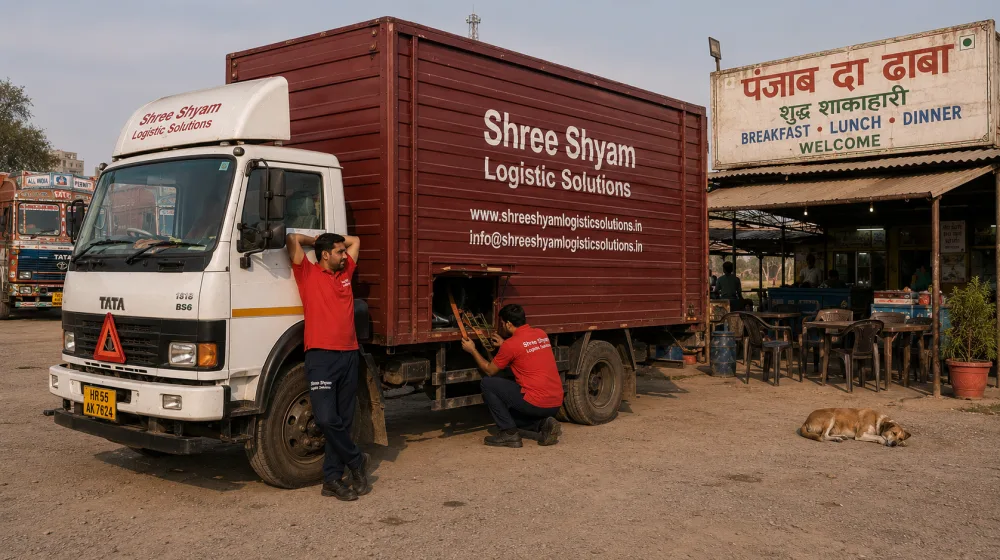
Possession delayed, posting abroad, showroom out of floor space — several situations make storage the smarter option over parking on a public road.
Key Takeaways
- Covered vehicle storage prevents the damage that weeks of roadside parking inevitably cause.
- Long-standing cars suffer battery drain, flat-spotted tyres, stale fluids and seized brakes without periodic care.
- Overseas postings, possession delays and dealer overflow are common reasons to choose warehousing.
- Combining storage with onward transport under one booking keeps accountability with a single team.
- Decide storage duration upfront but choose a facility that allows flexible extensions without penalty.
Situations where vehicle storage is the right call
Most people assume they will always have somewhere to park their car. In practice, there are several common situations where no suitable spot exists. A delayed flat possession means the vehicle arrives in a city before you have a garage or basement to keep it in. An overseas posting or extended business assignment lasting several months leaves a car sitting idle with nobody to start it or move it on street-cleaning days. Between leases or rental agreements, a gap of a few weeks often has no parking solution attached.
Dealer businesses face a different version of the same problem. When a batch of stock arrives before the showroom floor clears, those vehicles need a secure overflow location rather than a public lane. Auction buyers waiting on registration paperwork or financing approvals also need somewhere to park units safely until the documents come through. In every case, leaving a vehicle on a public road invites dust damage, accidental dents from passing traffic, and potential theft of accessories or parts.
Recognising these scenarios early allows you to plan storage as a deliberate step rather than an afterthought. A few days on a road feels harmless, but a few weeks starts showing on the paint, battery and tyres. The earlier you book proper storage, the less you spend on rectification later.
What long standing does to a vehicle
A car is designed to move. Left stationary for more than three or four weeks, the battery self-discharges, especially in hot climates where discharge rates are higher. The tyres develop flat spots where they press against the ground under the full weight of the vehicle, and in extreme cases the rubber compound deforms permanently. Brake rotors start surface-rusting within days if moisture is present, and that rust can bond the pads to the disc if the handbrake is left engaged for long periods.
Engine oil, coolant and brake fluid are hygroscopic or settle unevenly when stagnant. Seals that are normally kept lubricated by circulating fluid begin to dry and crack. Fuel in the tank absorbs moisture and degrades over time, leading to hard starts or injector issues. Wiper blades bond to the glass in dusty conditions, and rubber door seals stick to paintwork, sometimes peeling clear coat when the door is eventually opened.
None of this is catastrophic on day one. But the longer a vehicle sits, the more these small issues compound. Professional storage facilities mitigate these problems through periodic care routines that keep the vehicle in driveable condition throughout its stay.
Need a quote while you read?
Share your route and vehicle — we reply with an all-inclusive price.
Periodic care that prevents storage damage
The core of good vehicle warehousing is not just a parking space with a roof. It is the maintenance routine that keeps the car ready to drive out at any point. At minimum, a stored vehicle should be started and idled for ten to fifteen minutes every couple of weeks, allowing the alternator to charge the battery, circulate oil through the engine and bring coolant up to temperature. Tyre pressures should be checked and topped up to prevent flat-spotting, and the vehicle should ideally be rolled forward or backward slightly to change the contact patch.
Brakes benefit from being released and reapplied periodically so the pads do not bond to the rotor surface. A quick visual check for fluid leaks, rodent damage to wiring or hoses, and any pest intrusion under the bonnet takes minutes but catches problems early. A surface wipe or dust cover keeps the paint free from grit that scratches when eventually wiped carelessly. These are basic steps, but most owners who leave a car unattended skip all of them simply because the vehicle is out of sight.
Covered sheds versus open secured yards
Vehicle storage facilities generally offer two tiers: covered shed parking and open yard parking behind a gated boundary. A covered shed keeps rain, direct sunlight, bird droppings and tree sap completely off the vehicle. This matters for any car you plan to drive away without needing a full wash and polish, and it is essential for vehicles with soft-top roofs, fabric interiors exposed through sunroofs, or freshly repainted panels that are still curing.
An open yard with a perimeter wall, CCTV and controlled gate access is cheaper and perfectly adequate for vehicles that are not paint-sensitive, short stays under a couple of weeks, or dealer overflow where the cars will be detailed before reaching the showroom anyway. The trade-off is exposure to weather and dust, which means more cleaning at release and slightly faster degradation of exposed rubber and trim.
When choosing between the two, weigh the duration and the vehicle value. A week in an open yard does little harm; two months under open sky in a dusty Delhi NCR summer will leave a noticeable film on every surface and potentially fade exposed plastics.
- Covered sheds protect from sun, rain, bird droppings and airborne grit.
- Open yards suit short-duration or price-sensitive storage needs.
- Soft-tops, freshly painted panels and luxury finishes belong under cover.
- Dealer overflow stock often uses open yards when a detail is planned before display.
- Duration is the biggest factor: longer stays benefit more from a roof overhead.
Security, access control and inventory records
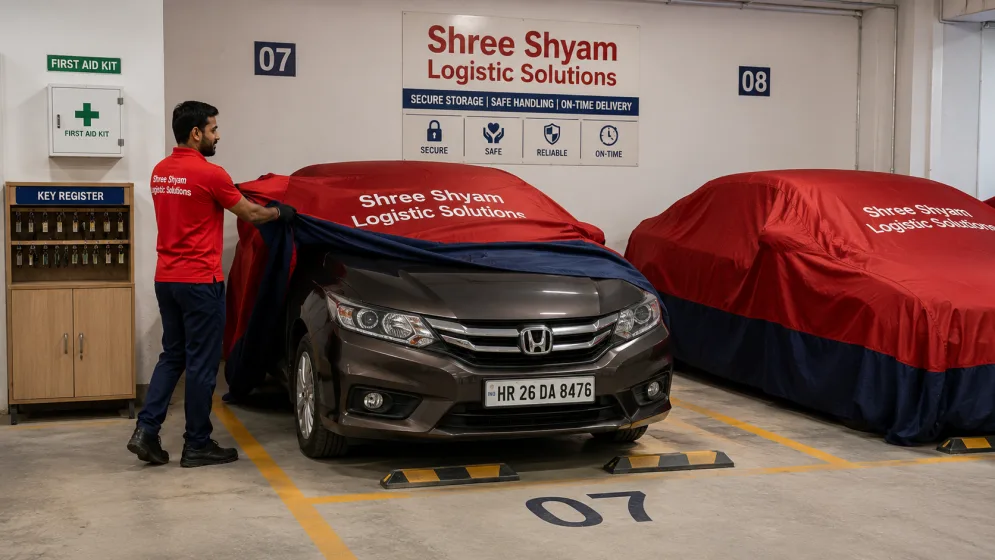
A vehicle stored somewhere should be at least as safe as it would be in your own locked garage. That means a boundary wall or solid fencing, a controlled entry gate where every visitor is logged, CCTV covering the parking bays and access points, and a key-management system so vehicle keys are tagged and stored separately from the vehicles themselves. No unauthorised person should be able to start or move a stored car.
Inventory records tie everything together. At check-in, the facility should photograph the vehicle from all angles, record the odometer, note any existing damage and issue you a receipt with a unique storage reference. At check-out, the same inspection is repeated so both sides agree on condition. If anything happened during the storage period, it is visible in the records rather than becoming a dispute without evidence.
Ask about access policy before you commit. Some facilities allow the owner to visit or start the vehicle with prior notice, while others restrict all access to their own staff for liability reasons. Know which model you are signing up for.
- Boundary walls or solid perimeter fencing with a single controlled gate.
- CCTV monitoring across all parking bays and entry or exit points.
- Keys tagged, logged and stored in a separate secure area.
- Photographed condition record at check-in and again at check-out.
- Visitor and access logs maintained for every vehicle movement.
Dust covers and additional protection measures
Even inside a covered shed, fine dust settles over time. A fitted dust cover or a breathable car cover placed over the vehicle adds a layer of protection that keeps the paintwork pristine without trapping moisture underneath. Breathability matters because a non-breathable plastic sheet traps condensation against the paint, which can cause water spots or encourage mould on interior surfaces if the cabin is not fully sealed.
For bikes, a similar breathable cover prevents dust from settling into chain links, brake calipers and instrument clusters. Two-wheelers stored for long periods also benefit from a fuel stabiliser added to whatever small amount of petrol remains in the tank, though this is less common in Indian storage practice. The key principle is that any additional protection should not introduce new problems like trapped moisture or restricted airflow around the vehicle.
Combining storage with onward transport
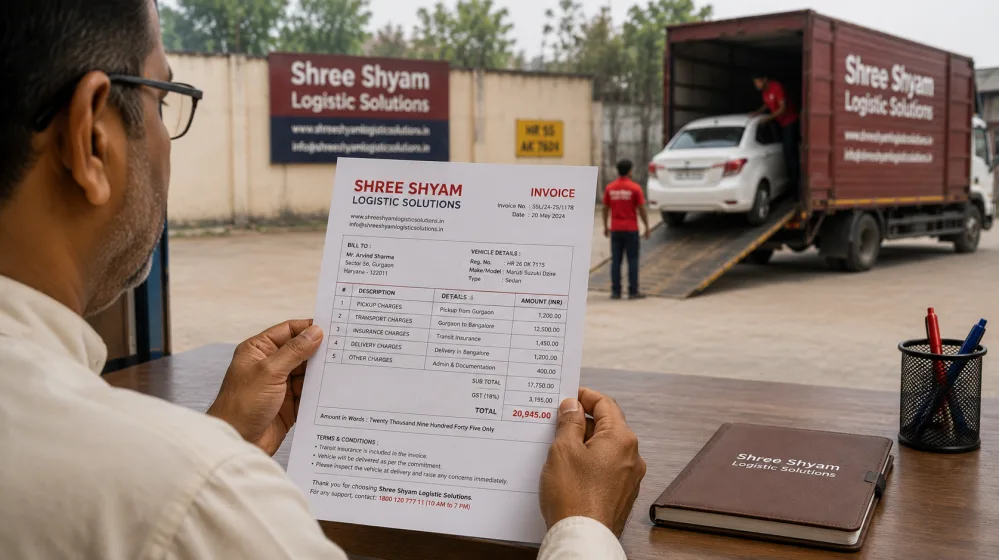
One of the most practical uses of vehicle warehousing is as a buffer between pickup and final delivery. Suppose you are relocating from Delhi NCR to Bangalore but the new apartment is not ready for another three weeks. Rather than delaying the entire move, the vehicle can be collected now, stored at a facility in Gurgaon, and dispatched to Bangalore the moment you confirm you are ready to receive it. One team handles the pickup, the storage and the onward leg, which means a single condition record, one point of contact, and no handover gaps.
This model works equally well for dealers receiving stock ahead of a launch date, corporate employees waiting for a transfer to finalise, or anyone whose plans change after the vehicle has already been collected. The storage period simply extends or shortens without needing a new booking or a separate logistics provider. Coordination is simpler, accountability is clearer, and the vehicle never sits in an unmonitored location between two separate service providers.
When requesting this combination, confirm upfront whether the storage charges begin from the day of pickup or from the day the vehicle arrives at the facility, and whether the onward transport quote is locked in at the time of the original booking or priced at the time of dispatch.
How to decide the right storage duration
Start by working backward from the date you will genuinely be ready to take possession or arrange onward delivery. Add a few days of buffer for paperwork, possession handover delays or travel uncertainties. It is better to book slightly longer and release early than to scramble for an extension at the last minute. Most facilities allow early release without penalty, but an emergency extension when the yard is full may not always be possible.
For indefinite durations like overseas postings where the return date is uncertain, ask whether the facility offers rolling monthly terms rather than requiring a fixed end date. This gives you flexibility to extend without renegotiating and to release with reasonable notice when your plans solidify. Be realistic about how long the vehicle might sit, because that determines whether you need covered or open storage and how frequently periodic care should be scheduled.
Choosing the right warehousing partner
The best vehicle storage facility for your needs is one that matches your duration, your vehicle type and your budget without cutting corners on security or periodic care. Visit the facility if possible, or ask for photographs of the actual bays, the boundary, the CCTV setup and the check-in paperwork. A condition report with photographs at both ends is non-negotiable; without it, any damage dispute becomes a matter of opinion.
Ask specifically about the periodic care schedule: how often is the vehicle started, are tyre pressures checked, is the battery monitored, and who is responsible if a rodent damages wiring during the storage period. Clarify insurance coverage during storage, whether your own motor policy remains valid while the vehicle is stationary in a third-party facility, and whether the storage provider carries any liability coverage of their own. These details matter far more than a slightly cheaper daily rate.
Frequently asked questions
How long can a car safely stay in vehicle warehousing?
There is no hard upper limit as long as periodic care is maintained. With regular battery charging, tyre pressure checks and engine idling every couple of weeks, a car can remain in professional storage for several months without mechanical issues. Duration should be matched to the periodic care schedule offered by the facility.
Will my car battery die during storage?
It will if nothing is done. A standard car battery self-discharges over three to six weeks depending on climate and parasitic drain. Professional warehousing includes periodic engine starts or trickle-charging that keeps the battery healthy throughout the storage period, preventing the flat-battery problem entirely.
Can I visit or access my vehicle while it is in storage?
This depends on the facility policy. Some allow owner visits with prior notice, others restrict access to their own staff for security and liability reasons. Confirm the access model before booking, especially if you might need documents or belongings from the vehicle during the storage period.
Is vehicle warehousing available for bikes and two-wheelers?
Yes. Bikes are stored under cover with wheels chocked and positioned in dedicated bays separate from cars to avoid any accidental contact. The same security, condition documentation and periodic care principles apply to two-wheelers in storage.
Talk to a vehicle transport expert
Every route and every vehicle is slightly different. If you would like this applied to your specific case — a particular car, a particular route, a particular deadline — call us on +91 99907 81652 or send us an enquiry. You will get a straight answer and a transparent quote.